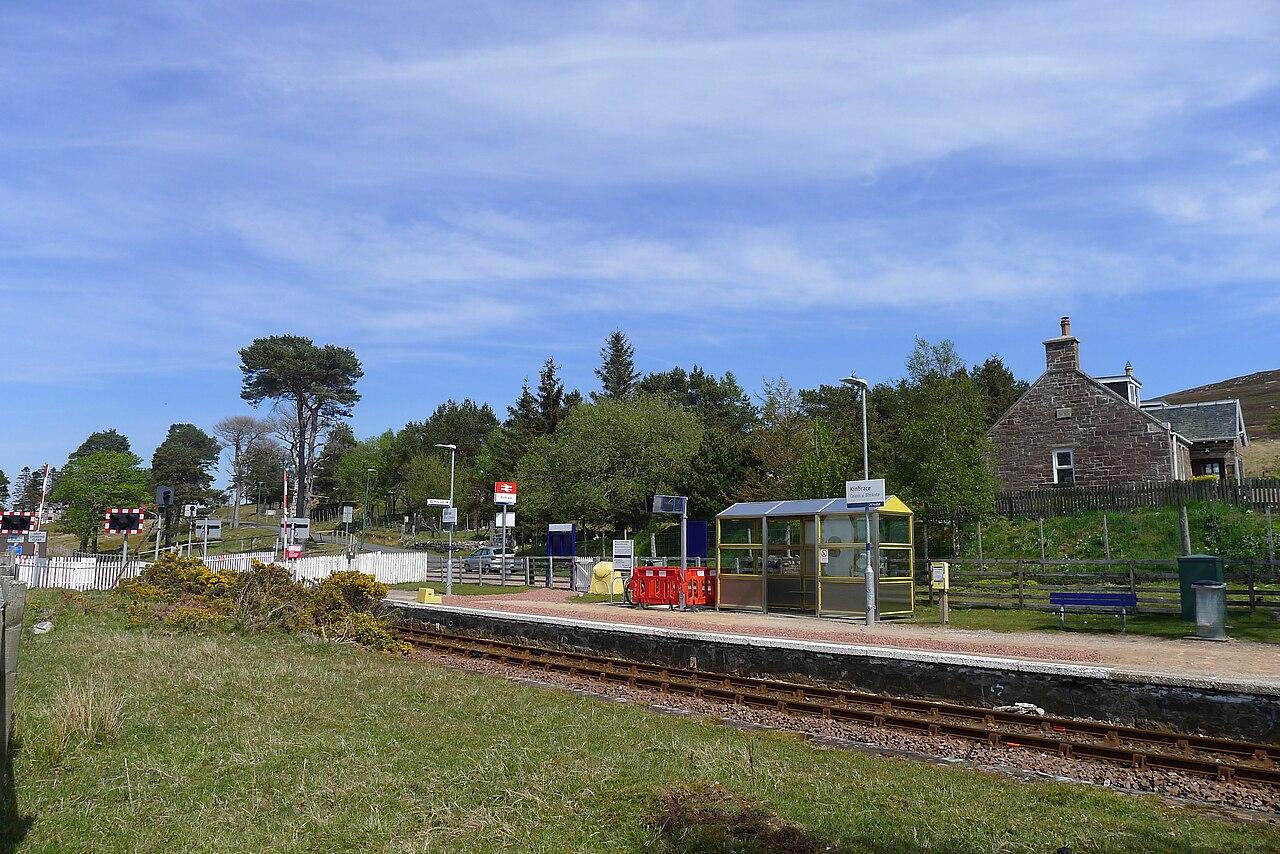
On the Far North Line, around 17 miles inland from Helmsdale, lies Kinbrace, a tiny Sutherland settlement surrounded by miles of open Highland landscape.
Today, Kinbrace is home to only a small population, but its quiet appearance hides a surprisingly rich history. People lived and farmed here long before the railway arrived, while over the years the station has handled passengers, sheep, timber and other goods. There was even a Cold War monitoring post nearby.
For anyone travelling north from Helmsdale towards Forsinard, Thurso or Wick, Kinbrace is also part of one of the most remarkable stretches of the Far North Line, where railway, road and river make their way through the remote interior of Sutherland.
Where is Kinbrace in Scotland?
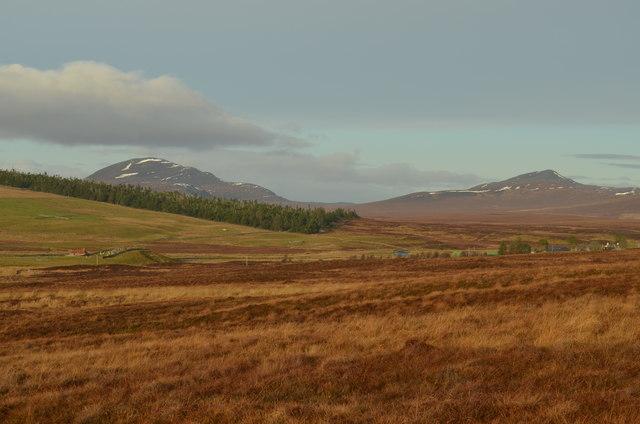
Kinbrace is in Sutherland in the northern Highlands, at the junction of the A897 between Helmsdale and Melvich and the B871 heading west towards Syre and Strath Naver. The 2011 Census recorded a population of just 51.
Its location helps explain why transport has played such an important part in its story.
Helmsdale lies about 17 miles to the south, but Kinbrace is more than 400 feet higher. The Far North Line follows the River Helmsdale inland through the Strath of Kildonan before climbing steadily towards Kinbrace.
For the railway traveller, it is an impressive transition. The coastal landscape around Helmsdale gradually gives way to a much more sparsely populated Highland interior.
The Far North Line Community Rail Partnership’s own line guide describes the railway climbing continuously for those 17 miles from Helmsdale towards Kinbrace, passing Kildonan and the sites of several former railway features and settlements along the way.
Kinbrace before the railway
Although the railway has become closely associated with Kinbrace, the settlement is much older.
Archaeological remains on Kinbrace Hill include hut circles, field systems and clearance remains showing that people were living and working this landscape in prehistoric times. The Highland Historic Environment Record identifies a substantial prehistoric settlement on the lower slopes of Kinbrace Hill, including hut circles and an associated field system.
Kinbrace also appears in written records centuries before the railway. The township is documented in 1527 as part of a grant by James V to William Sinclair. A Hearth Tax return from 1690 recorded seven tenants, while later estate records show nine tenants at Kinbrace and Shunachy in 1808.
The remains around Kinbrace Farm include old buildings, field walls, lazy beds and corn-drying kilns, traces of a community that relied on this land long before trains began passing through the strath.
What does the name Kinbrace mean?
Even the name Kinbrace has an intriguing story.
The Gaelic name is Ceann a’ Bhràist, but its precise origin is uncertain. Place-name researcher Iain Mac an Tàilleir has suggested that it may mean something like “the head of the upland”, incorporating a form of the Gaelic bràigh, meaning upland.
There is, however, another much more colourful explanation.
An oral tradition recorded by the Reverend Donald Sage tells of a Clan Gunn chief whose residence was at Kinbrace. According to the story, he wore a large silver brooch as a mark of his status and became known as the Bràisteach Mòr. Kinbrace, or Ceann a’ Bhràist, was consequently associated with the seat of this “dignitary of the brooch”.
There is no need to choose between the two explanations. Together, they illustrate how landscape, language and local tradition have become intertwined over centuries.
The railway arrives at Kinbrace
The next great change came in the 19th century.
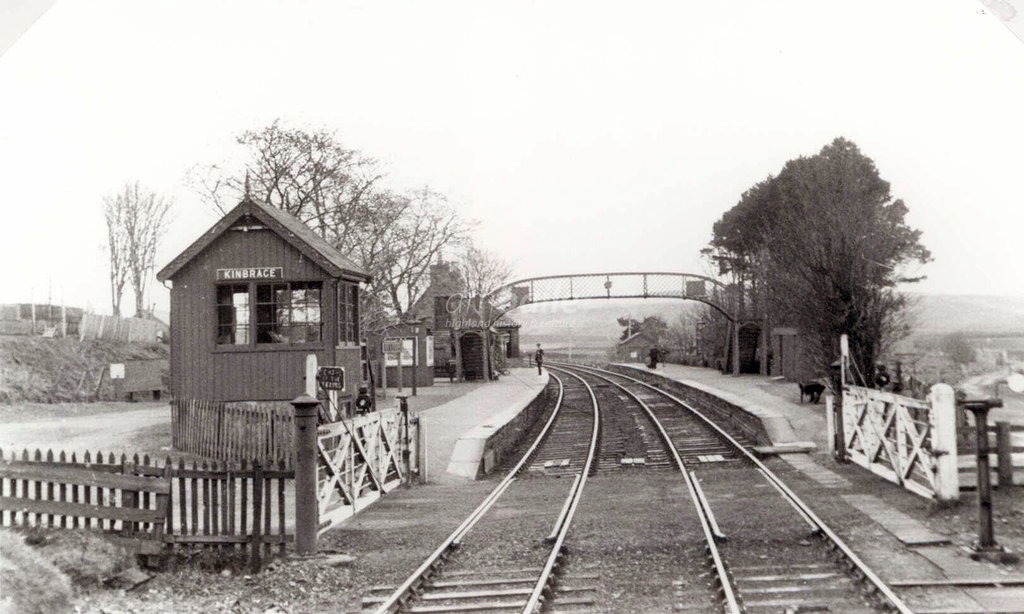
The railway from Helmsdale northwards was constructed by the Sutherland and Caithness Railway, completing the connection towards Wick and Thurso. Kinbrace station opened with the new line in 1874.
It was a considerable feat of railway construction. The route from Helmsdale had to turn inland because the cliffs and deep valleys of the direct coastal route made continuing north along the coast impractical. The railway instead followed the Strath of Kildonan before climbing towards Kinbrace and then continuing north towards Forsinard and Caithness.
Kinbrace was once a much more substantial railway station than visitors see today.
There were originally two platforms and a passing loop. The station also had a goods yard, goods shed and loading banks. Two signal boxes were added later in the 19th century. The surviving station building, once beside the southbound platform, is now a private house.
By 1887, Bartholomew’s Gazetteer of the British Isles described Kinbrace simply as a railway station and post office in Kildonan parish, 16 miles north-west of Helmsdale.
It is a small description, but it says a great deal about just how central the railway had become to Kinbrace’s identity.
Sheep, deer and the working railway
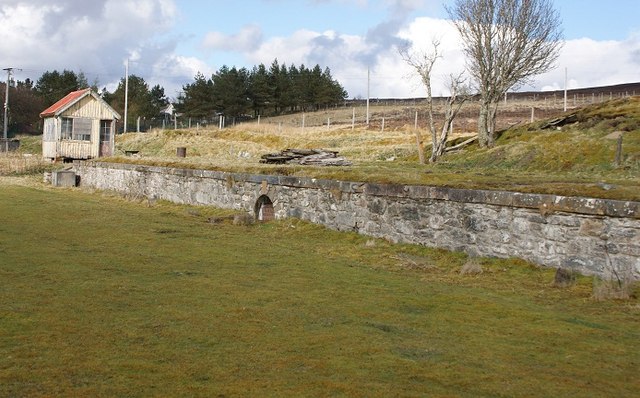
Kinbrace station was not built simply for passengers.
The railway provided an essential connection between this remote part of Sutherland and markets elsewhere in Scotland and Britain.
Livestock was particularly important. Kinbrace was once the site of an annual sheep sale, and in 1961, 13 trucks of lambs were consigned south by rail on the day of the sale.
The old goods facilities handled other traffic too. Railway records note the unusual detail that the Kinbrace goods yard had a chute for loading deer carcasses onto trains during the Highland shooting season.
It is difficult to imagine that activity when standing at the peaceful single-platform station today, but livestock, sporting estates and agriculture once generated substantial railway traffic throughout the Highlands.
Rail and agriculture were closely connected, and for isolated communities such as Kinbrace the railway offered access to markets that would otherwise have been difficult to reach.
Bringing timber back to the railway
More than a century after Kinbrace station opened, there was an attempt to give rail freight another role here.
EU funding helped establish a timber loading area just before Kinbrace station so timber from extensive local forests could be transported by rail rather than taken entirely along narrow Highland roads.
The operation was unusual.
Freight wagons were hauled north after the final passenger service of the day and loaded overnight while standing on the running line. They then had to be moved south again before the first passenger train required the track the following morning.
The experiment lasted only about a year. Falling timber prices and competition from road haulage ultimately made the rail operation uneconomic. Further funding was subsequently obtained to improve the A897 and the log lorries took over.
The loading area may have been relatively short-lived, but it is another reminder that the Far North Line has always been about more than simply carrying passengers.
Kinbrace and the Cold War
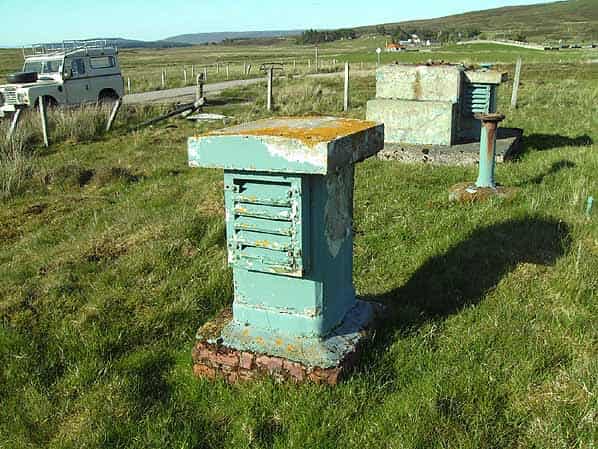
One of the least obvious chapters in Kinbrace’s story lies beside the B871 west of the settlement.
An underground Royal Observer Corps monitoring post opened at Kinbrace in 1959 and remained operational until 1991. The surviving site lies beneath a low mound within a compound beside the road.
It formed part of the nationwide network of monitoring posts established during the Cold War.
The Royal Observer Corps had originally been associated with identifying and reporting aircraft, but its role evolved as the threat of nuclear war developed. Underground posts across Britain were intended to provide information following a nuclear attack and to monitor radioactive fallout.
For more than three decades, therefore, this exceptionally quiet corner of Sutherland formed part of Britain’s national warning and monitoring system.
It is a remarkable contrast. Within a relatively small area around Kinbrace are archaeological remains spanning thousands of years, a Victorian railway and surviving traces of the Cold War.
A road west to Strath Naver
Kinbrace has another important role geographically.
At the settlement, the B871 turns west from the A897 towards Syre and Strath Naver, making Kinbrace a gateway between the Far North Line and the landscapes of north-west Sutherland.
That connection remains interesting for visitors today.
For cyclists, one option highlighted by the Far North Line Community Rail Partnership is to take a bicycle by train to Kinbrace and cycle the 17 miles back towards Helmsdale. Because Kinbrace stands more than 400 feet higher than Helmsdale, much of the route follows the River Helmsdale downhill through the strath.
For more ambitious cyclists, there is also a route of around 50 miles west from Kinbrace via Syre and Strath Naver towards Lairg.
It demonstrates something that has always made Kinbrace significant despite its tiny population. It sits at a meeting point between different routes through a very large and sparsely populated landscape.
Kinbrace station today
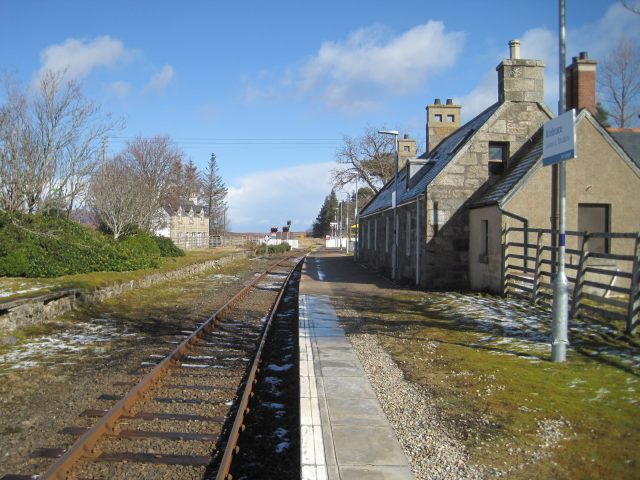
Kinbrace railway station remains open on the Far North Line, more than 150 years after the first trains called here.
It is now a single-platform, unstaffed station and operates as a request stop.
For generations, passengers at request stops had to make themselves clearly visible and signal to the driver that they wanted the approaching train to stop.
At Kinbrace that changed in December 2022, when a new Press & Ride request-stop kiosk came into operation. Passengers waiting on the platform can now press a button which sends a request electronically to the approaching train, removing the need to hand-signal the driver.
It is a thoroughly modern solution at a station whose origins go back to 1874.
Northbound trains continue from Kinbrace towards Forsinard, before crossing some of the most remote railway landscape in Britain on their way towards Caithness. Southbound, the next station is Kildonan, before the long descent through the strath towards Helmsdale.
More than a remote railway station
Kinbrace is easy to pass through quickly.
From the train window, there is a platform, a handful of buildings, open moorland and the long road disappearing west.
But look more closely and an extraordinary amount of Highland history is concentrated here.
People were farming around Kinbrace long before written records began. Medieval documents reveal an established township. The arrival of the railway in 1874 connected the settlement with places far beyond Sutherland, carrying passengers, sheep, deer and later timber. During the Cold War, observers beneath the ground nearby were prepared to monitor the consequences of a nuclear attack.
Today the Far North Line continues to provide Kinbrace with a direct railway connection through a landscape where distances are great and communities are small.
Perhaps that is what makes Kinbrace so characteristic of the Far North Line. The station may be tiny, but the railway’s importance cannot be measured simply by the number of buildings around its platform.
For more than 150 years, the line has connected this remote part of Sutherland with the rest of the Highlands and beyond.
Frequently Asked Questions about Kinbrace
Where is Kinbrace in Scotland?
Kinbrace is a small settlement in Sutherland in the northern Highlands of Scotland. It lies on the A897 between Helmsdale and Melvich, where the B871 turns west towards Syre and Strath Naver.
Does Kinbrace have a railway station?
Yes. Kinbrace station is on the Far North Line between Kildonan and Forsinard. It opened with the Sutherland and Caithness Railway in 1874 and remains in use today.
Is Kinbrace a request stop?
Yes. Passengers waiting at Kinbrace use the Press & Ride kiosk on the platform to request the approaching train to stop. The system at Kinbrace came into operation in December 2022.
What is Kinbrace known for?
Kinbrace is known for its remote Highland location, its station on the Far North Line and its historic connections with sheep farming and railway freight. The surrounding area also contains prehistoric archaeological remains, while a former Royal Observer Corps Cold War monitoring post survives near the B871.