In February 1955, a goods train near Lairg was buried in a snowdrift for three days. It took 60 men, three locomotives and a snowplough to free it. The incident even made headlines in America.
It was one episode in a winter when severe snowstorms cut off communities across northern Scotland. The military and local relief effort, known as Operation Snowdrop, brought food, medicine and animal feed to isolated settlements, evacuated people needing medical care and helped rescue livestock.
The storms hit northern Scotland
The first major storm began on 10 January 1955. Strong winds drove snow into enormous drifts across Caithness and Sutherland. Blizzards reached around 60 mph, and temperatures in Wick fell to about minus eight degrees Celsius. By 12 January, roads across Caithness were blocked, leaving residents and travellers stranded and supplies running short.
The Far North Line was especially exposed. Much of the railway crosses open moorland, where wind can sweep snow across the tracks. The Flow Country around Forsinard, Altnabreac and Scotscalder was particularly vulnerable. Although railway staff had measures such as snow fences and ploughs, the 1955 storms overwhelmed transport networks across the region.
Operation Snowdrop
As the emergency grew, the Royal Navy and Royal Air Force joined local authorities in the relief effort. Aircraft delivered food, fuel, medicines and animal fodder to isolated communities, and evacuated people who needed medical care. HMS Glory, stationed in Loch Eriboll, supported the operation, with other aircraft working from Wick and RAF Kinloss.
By 25 January, military aircraft and helicopters had completed 231 sorties, delivering 35½ tons of supplies to 130 locations. About half the supplies were animal fodder—a measure of the serious difficulties facing farmers.
Pilots had to contend with poor visibility and find places to land. Residents sometimes marked landing sites in the snow; a large letter H indicated a helicopter landing area, while D signalled a need for medical assistance. The operation depended on military crews, emergency services and local people working together.
A train buried near Lairg
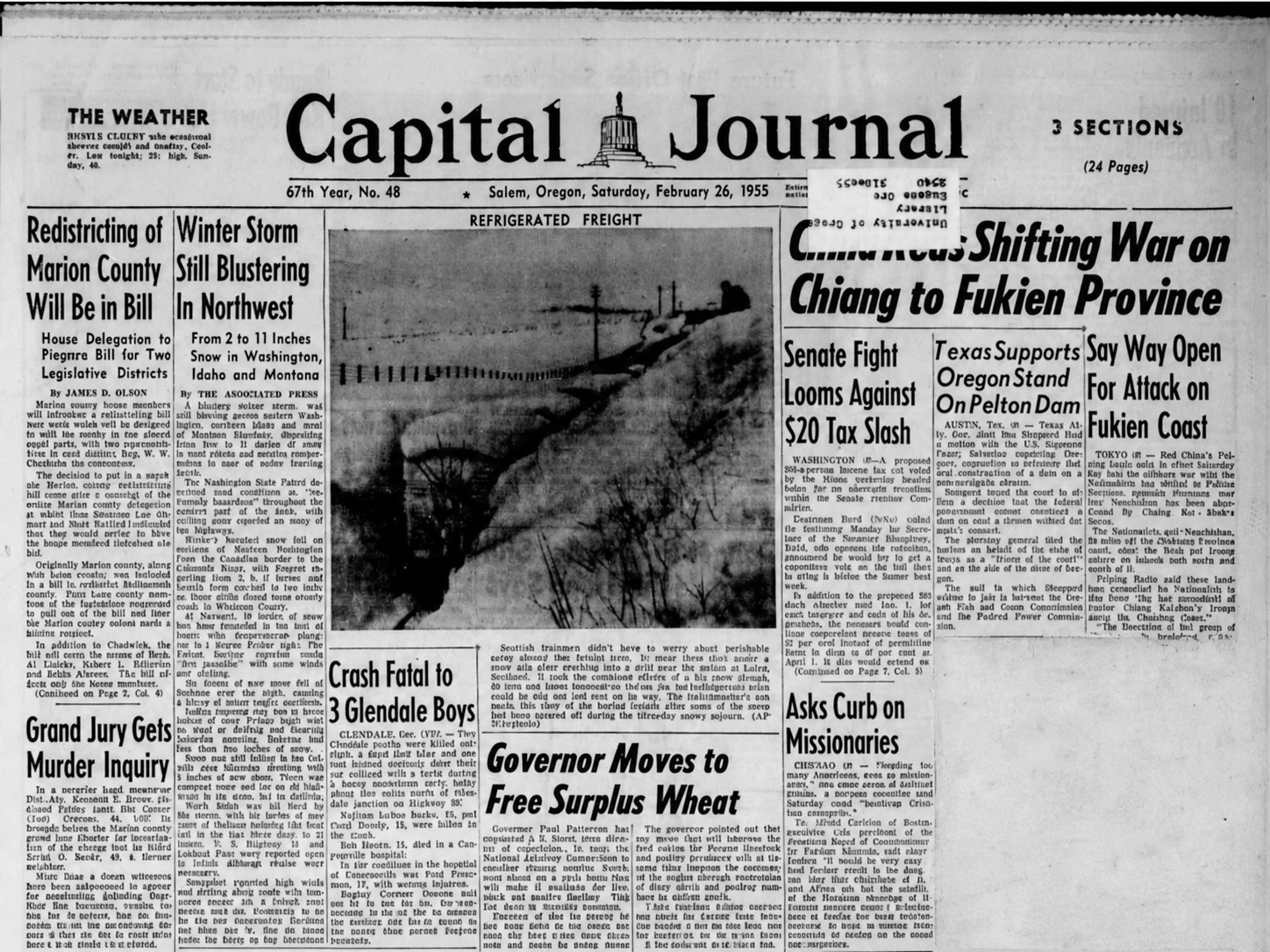
During the February storms, a goods train became trapped in a huge drift near Lairg station and remained buried for three days. Its recovery required 60 men, three locomotives and a large snowplough. The stationmaster’s son photographed the train as it was uncovered.
On 26 February, the photograph appeared on the front page of the Capital Journal in Salem, Oregon, under the headline “Refrigerated Freight”. The headline was wry, but the international attention showed how extraordinary the conditions had become.
Goods trains carried essential supplies, farm produce, livestock and other freight, so clearing the line mattered well beyond passenger travel. Railway workers faced freezing conditions and compacted snow, much of which still had to be cleared through hard physical labour.
Passengers stranded outside Wick
John MacRae, then 18 and doing National Service, later recalled travelling south from Wick by train with his girlfriend. The train became stuck in a snowdrift about three miles outside the station. A railway worker took the six passengers into his home, where they kept warm beside a peat fire.
The next day, a relief train set out from Inverness with hot food but also became trapped. MacRae, dressed for the weather, walked along the railway to collect the supplies.
Once the passengers reached Inverness, journalists were waiting, believing the couple were newlyweds whose honeymoon had been interrupted by the storm. There had been no wedding, but the story offers a lighter moment amid the hardships.
An airlift from Altnabreac
Altnabreac, deep in the Flow Country, was completely snowbound. Resident Elret Sutherland was heavily pregnant and needed to reach hospital in Thurso. With other transport impossible, a helicopter evacuation was arranged.
Her family and local men cleared snow and scattered ashes to mark a landing area with a large H. Elret was flown to Thurso, only to find that the hospital was closed. She stayed with a cousin until her son was born a week later.
For her family, the helicopter was a vital link to medical help when ordinary travel had failed.
More snow in February
After conditions began to improve at the end of January, another storm struck on 16 February. Winds reached up to 71 mph, and drifts exceeded ten feet in places. Roads and railway services were blocked again, with serious obstructions around Lairg and Altnabreac.
Clearing the tracks was difficult because wind could quickly refill cuttings with snow.
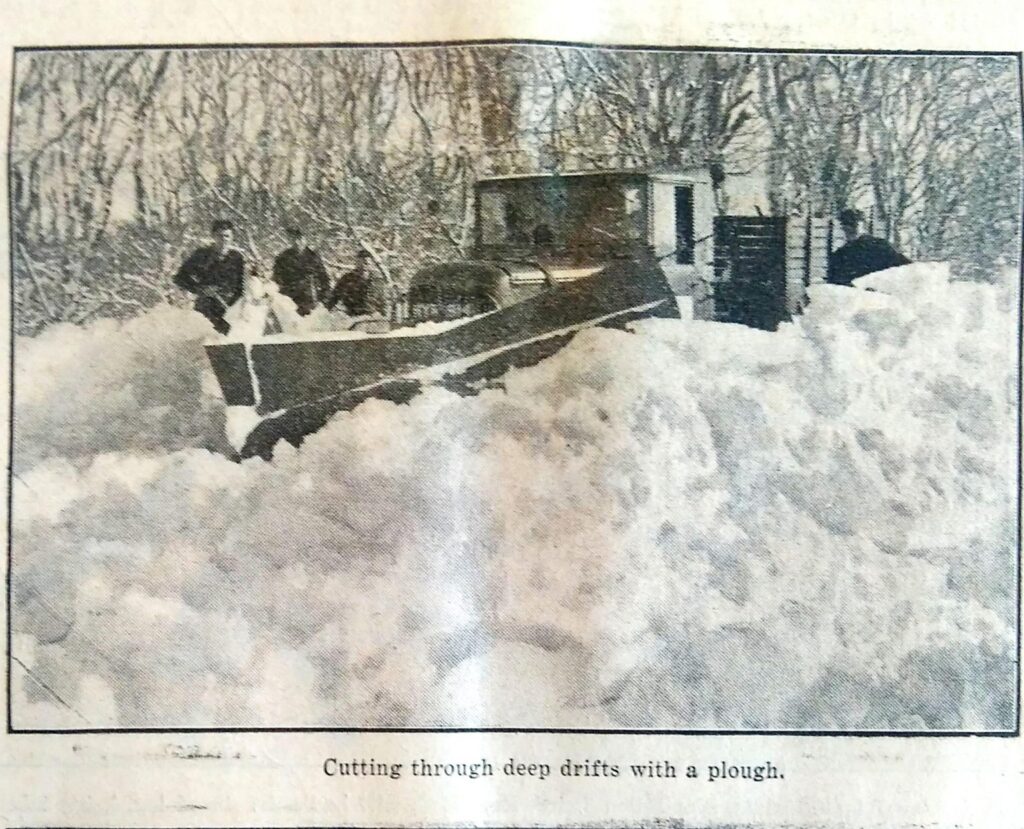
Caithness County Council records show the scale of the strain on road crews: one drift near Forss was more than 12 feet deep, and the Roads Department received over 1,000 telephone calls during the storm.
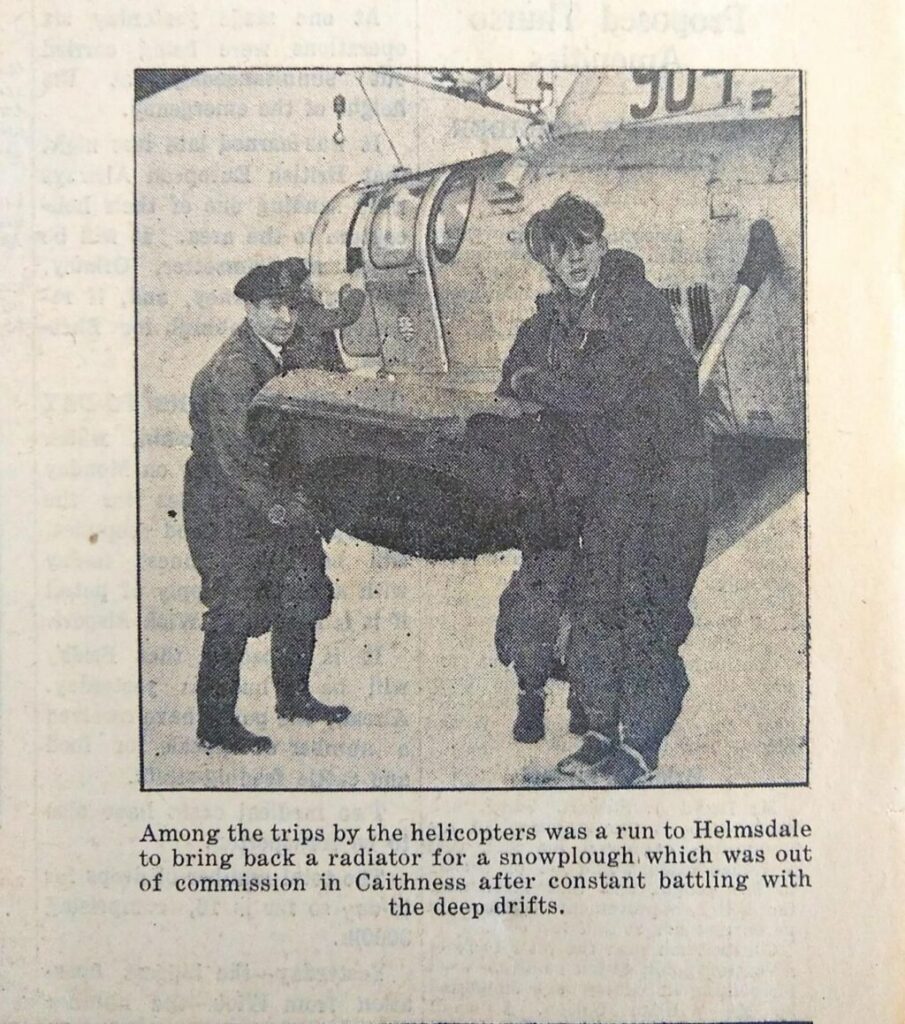
The conditions also affected the equipment needed to clear roads. When a snowplough broke down, a helicopter flew to Helmsdale to collect a replacement radiator. Aircraft were being used not only to deliver supplies and evacuate people, but also to help keep essential machinery working
Rescuing livestock and helping one another
Sheep and cattle were trapped by snow, sometimes unable to reach grazing or stored feed. Aircraft delivered fodder to isolated farms, while the Scottish SPCA helped rescue weakened sheep. Some animals were airlifted, with helicopters able to carry five sheep at a time. Protecting livestock also helped protect the livelihoods of farmers and crofters.
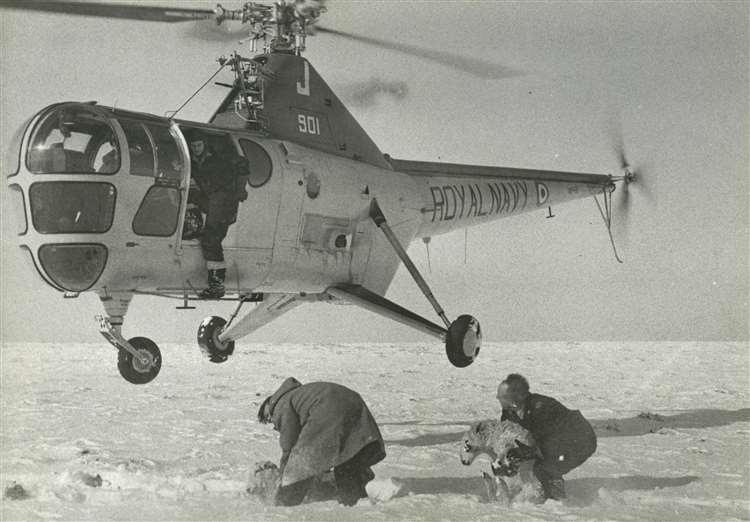
The relief effort involved many people beyond the military. Police coordinated requests, medical staff cared for patients, and railway workers and local residents helped neighbours. At sea, the Thurso lifeboat carried supplies to coastal communities such as Sandside and Reay. When it could not land at Portskerra, medical supplies, including insulin, were thrown onto the quay. Local fishermen also transported fuel for helicopter operations.
A winter remembered
Operation Snowdrop showed how vulnerable remote communities could be when roads and railways were blocked—and how much could be achieved through cooperation and local knowledge. Its most memorable details are often personal: stranded passengers gathered around a peat fire, a pregnant woman flown from Altnabreac, and railway workers digging a buried train out near Lairg.
The winter of 1955 is part of the Far North Line’s story not only because of the snow and the struggle to keep trains moving, but because of the people who relied on the railway and worked together to keep Highland communities connected.
Frequently Asked Questions About Operation Snowdrop
What was Operation Snowdrop in Scotland?
Operation Snowdrop was a military and civilian emergency relief operation launched during the severe snowstorms of January 1955 in northern Scotland. Royal Navy and RAF aircraft delivered food, medicines and animal fodder, rescued people and livestock, and helped communities isolated by deep snow. Severe weather returned in February, requiring further emergency assistance.
How did the 1955 snowstorms affect the Far North Line?
The snowstorms caused major disruption to railway services between Inverness, Wick and Thurso. Trains became stranded in deep snowdrifts, including a goods train near Lairg that took three days to recover. The February storms also blocked the railway around Lairg and Altnabreac, forcing further closures.
Which Highland communities were affected by Operation Snowdrop?
Communities throughout Caithness, Sutherland and other parts of northern Scotland were affected. Among those associated with the operation were Wick, Thurso, Lairg, Altnabreac, Helmsdale and numerous isolated crofting and farming settlements. Some communities required supplies or medical assistance to be delivered by helicopter.
Do You Remember the Winter of 1955?
The Far North Line Community Rail Partnership is always interested in discovering more about the people, places and events that have shaped the railway’s history.
Do you remember Operation Snowdrop, or have family photographs, newspaper cuttings or stories passed down about the great snowstorms of 1955?
Perhaps a relative worked on the railway, helped clear the snow or witnessed the rescue helicopters arriving in their community.
We would love to hear from you.
Every recollection and photograph helps preserve another part of the Far North Line’s remarkable history for future generations.
References and Further Reading
- High Life Highland, Nucleus: The Nuclear and Caithness Archives. Operation Snowdrop 1955. Archival research using Caithness County Council records, the John O’Groat Journal and Scottish SPCA material.
https://www.highlifehighland.com/blog/posts/operation-snowdrop-1955 - Capital Journal, Salem, Oregon, 26 February 1955. Contemporary Associated Press photograph and report of the snowbound goods train near Lairg.
https://oregonnews.uoregon.edu/lccn/sn90066132/1955-02-26/ed-1/seq-1/ - BBC News, 14 December 2022. The Snowstorms That Buried Homes and Sheep. Eyewitness recollections, including John MacRae’s account of the stranded train near Wick.
https://www.bbc.com/news/uk-scotland-highlands-islands-63942608 - Wick Voices, The Wick Society. It Was a Fine Life. Elret Sutherland’s oral history, including her evacuation from Altnabreac during Operation Snowdrop.
https://www.wickvoices.co.uk/voices_listen.php?id=1204202214392879348 - UK Parliament, Hansard, 25 January 1955. Snowstorm, Highlands and Islands. Government statement detailing the emergency relief operation.
https://api.parliament.uk/historic-hansard/commons/1955/jan/25/snowstorm-highlands-and-islands-1 - John O’Groat Journal, 21 January and 25 February 1955. Contemporary photographs of helicopter operations and snow clearance, reproduced in the Nucleus archival collection.
- Far North Line Community Rail Partnership. Winters Past on the Far North Line: Battling Highland Snow.
https://www.fnlcrp.co.uk/winters-past-far-north-line/